
Diagnosing Reasons Why Your Pool Pump Won’t Prime and How to Fix It

Priming your pump is purging air from the pipes and creating a vacuum to pull water from the pool. Staring at a pump basket that won’t hold water or loses its prime is not something any pool owner wants to see.
When this happens, the main culprits are usually an air leak or clogging from debris.
Let’s take a look at why it’s happening and how to get the water flowing again.
Rules When Priming
- Always turn the pump off when moving valve handles or pump lids. Changing these while the pump is running can blow out internal gaskets or cause expensive cracks.
- Always open the manual air relief valve before priming your pump. The pump cannot pull water in if it can’t push the air out.
- Make sure all valves are in the “open” position. If valves are closed then water cannot flow to the pump.
The Basics Check: Water Level and Skimmers
Before we start diving into the plumbing itself, check some of the potential simple culprits first.
- Low water levels. If your pool water is below the skimmer line, the pump cannot draw in water anymore. Make sure your water is at least halfway up to the skimmer for proper suction.
- Stuck weir door. Check your skimmer weirs (the flapper door in the skimmer) to see if they are stuck in the “up” position. This can act like a dam, blocking water from entering the pipes. They should be free-flowing and rest just below the waterline.
- Full skimmer and pump baskets. A basket packed with leaves and other debris will choke water flow before it even reaches the pump. Empty all your baskets for a smooth flow.
- Dirty filter. A dirty and clogged pool filter can create unnecessary backpressure. Give your filters a good scrub down or backwash to make sure they are clean of debris.
Check for Air Leaks
The most common issue is an air leak on the suction side of your pool system. Even if there is a pinhole leak in this section, the pump will pull in air, causing gaps in the pipes.

The Pump Housing
The pump itself can be the most frequent source of air leaks because it is the part that pool owners open most often.
- The pump’s lid has a large rubber O-ring underneath. If it’s cracked, flat, or has debris on it, the vacuum seal can be broken. Remove the O-ring and inspect for damage. If it looks good, wipe it clean and apply a silicon-based pool lubricant. Otherwise, replace it with a new one.
- Each pump typically has one or two drain plugs at the bottom of the pump housing. These can loosen or have worn seals over time. Make sure they are snug, and the gaskets are intact.
The Pump’s Union Fittings
Most pumps have a threaded nut that connects the intake and discharge unions to the PVC piping.
These unions are under constant stress from vibrations and heat and can loosen during the swim season. They also have o-rings and gaskets that need to be checked periodically.
Pool Valves
If your pool has multiple suction lines, like multiple skimmers and a main drain, you likely have multiple pool valves that connect to the pump.
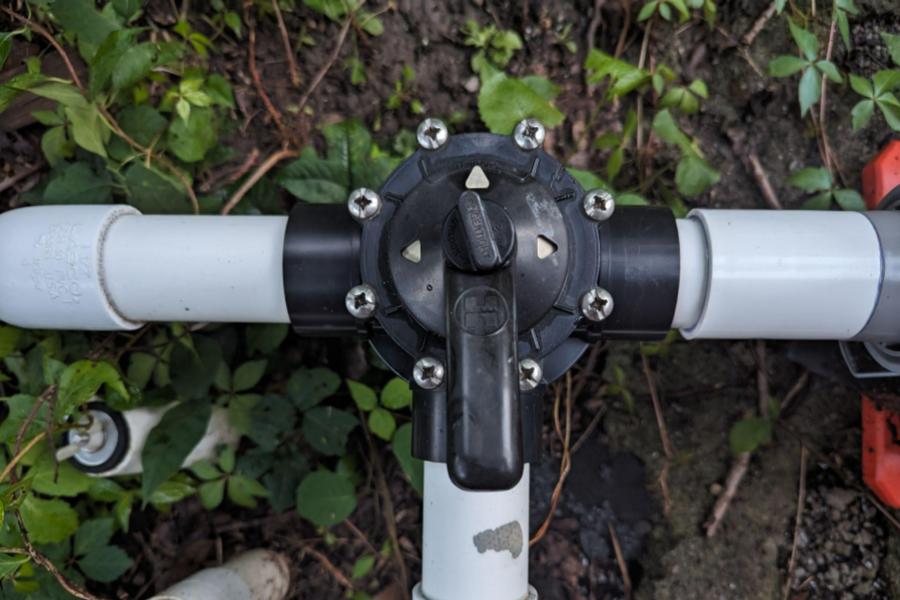
These valves have internal O-rings in the stems under the handle. Because they are made of plastic and often sit in direct sunlight all day, they are also prone to cracking
Pro Tip: The “Shaving Cream” Test
If you’ve checked the lid, the unions, and the valves but still see air bubbles in your pump basket, it’s time for the ultimate DIY diagnostic tool: a can of shaving cream.
This is a cheap but effective way to find leaks that are too small for the naked eye to see but large enough to ruin your pump’s prime. Hit each section and follow these steps:
- Lather it up. Apply a thick layer of shaving cream around the valve handles, the union fittings, and any PVC glue joints while the pump is running.
- Watch for the “gulp”. If there is an air leak, the vacuum will pull the shaving cream into the crack or seal.
That’s it! If you see a hole opening up in the foam or the cream disappearing into a fitting, you’ve pinpointed the exact spot that is “inhaling” air.
Note: There very well can still be a leak
Check for Hidden Blockages
Sometimes the system is airtight, but the pathway is physically blocked.
If you happen to notice your pump making strange noises when trying to prime, there is a high chance that the pump’s impeller is clogged.
The impeller is a rotating blade inside the pump that sucks the water from the pool and pushes it back in. This can often get backed up with leaves and debris that the pump basket misses.
Cleaning it and removing any obstructions can resolve this issue. The pump MUST be off at the breaker before you stick your hand anywhere near the pump!
Know When To Call a Pro
If you checked these common areas and still cannot get your pump to prime, chances are there is something bigger going on with your plumbing like a leak underground.
Don’t hesitate to call a professional, as they have the leak detection equipment to quickly diagnose issues.