
In the midst of all the laughter, splashes, and friendly competition, it’s easy to overlook the importance of safety.
However, pool safety must always be a top priority for homeowners. Whether you are hosting a summer bash or a quiet family swim, these considerations ensure everyone has a fun and secure time in the water.
Layers of Pool Protection
The first line of defense is to prevent anyone from entering the pool area in the first place. If they do, having the ability to be notified as soon as possible is key.
- Child safety locks on the nearest door to the pool: If you have a door that goes outside to your pool area, install a lock high enough so young kids cannot get out without the help of an adult. For sliding glass doors, even a tension rod will do the trick
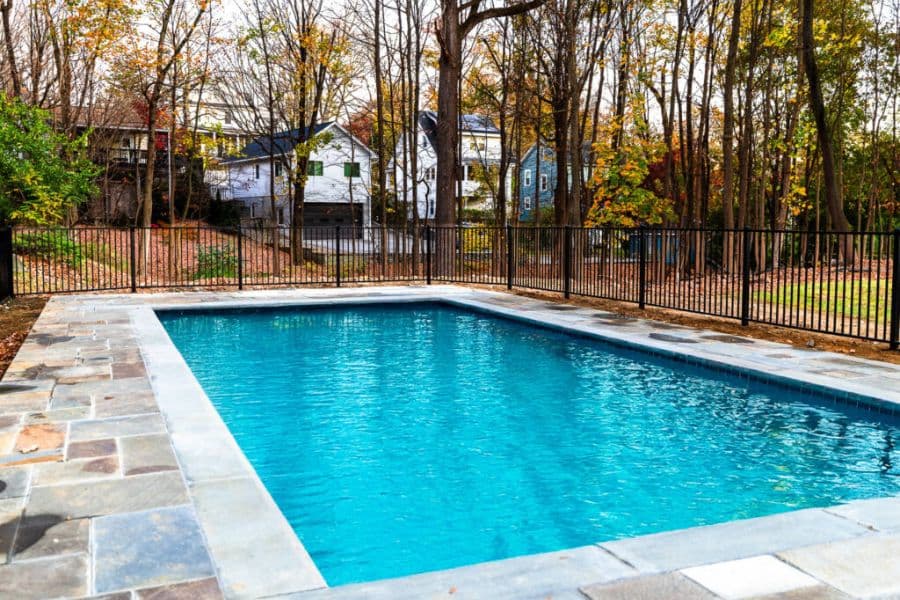
- Fencing on four sides of the pool: Install a four-sided fence at least 4 feet high with self-closing, self-latching gates. The latch should be positioned out of reach of children. This reduces the risk of drowning by 83%.
- Surface and Door Alarms: Use surface wave sensors to detect water entry and door alarms to alert the household whenever the pool area is accessed.
Check your local laws and ordinances around fencing. While most towns across the United States require some type of fence or barrier to surround the pool, some might have varying levels of height and distance to the pool.
Understand Basic Pool Rules
It is never too early to teach kids how to behave around the water. Simple, non-negotiable rules help prevent emergencies:
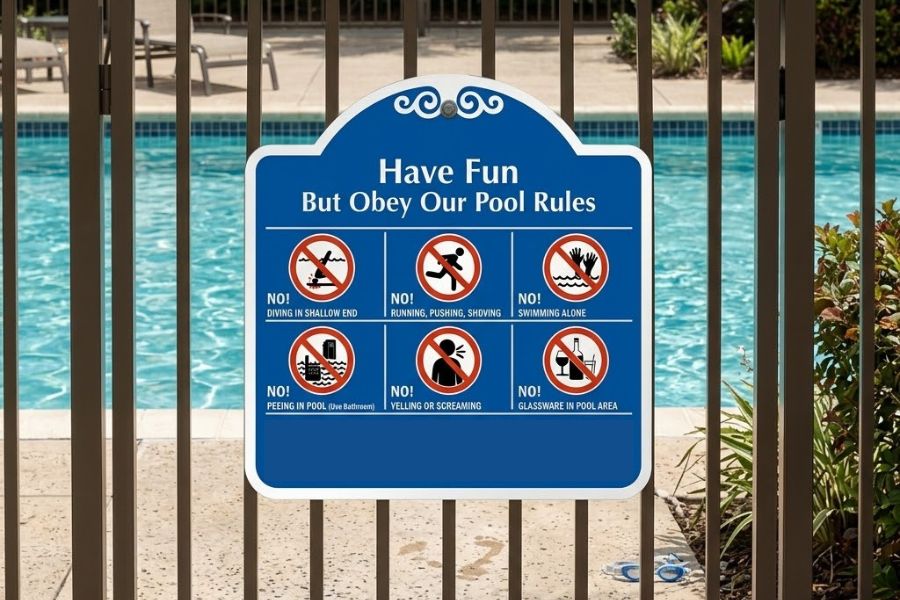
- Walk, Don’t Run: Decks, patios, and even grass become incredibly slippery when wet. A simple slip can lead to a fall onto the hard deck or an accidental tumble into the water.
- The Buddy System: Never swim alone! Always have a friend or family member with you in case of a cramp or emergency.
- Know Your Swimmers: Be aware of the swimming abilities of all participants. Those with limited skills should stay in the shallow end and use Coast Guard-approved flotation devices.
Adult Supervision is a Must
Kids should never swim by themselves. Having a designated “water watcher” is the most effective safety measure around a pool.
- Active Supervision: This watcher should be responsible for enforcing rules and should not be distracted by phones, books, or conversation.
- Be CPR Certified: Every qualified adult should be CPR-certified! Organizations like the American Heart Association and American Red Cross, that offer CPR and first aid classes.
- Emergency Readiness: Keep a life ring or shepherd’s hook readily available near the pool. While pool noodles are fun, they are not rescue devices.
- First Aid: Keep a fully stocked first aid kit nearby for minor scrapes or bruises that occur on the deck.
The Dangers of Diving
Jumping in and performing diving board tricks is a highlight of pool ownership, but it carries the highest risk for serious injury.
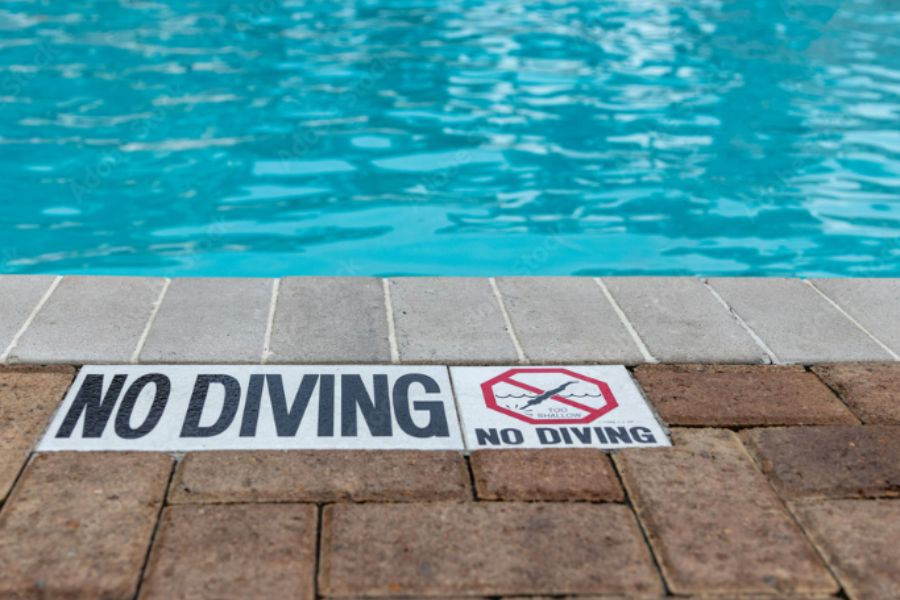
- Depth Requirements: Clearly mark safe diving areas. Typically, water depth should be at least 7.5 feet for diving, though you should always check your diving board manufacturer’s specific requirements.
- No Diving Zones: Never allow jumping or diving into shallow ends or above-ground pools.
- Maintenance: Ensure diving boards and platforms are properly installed, stable, and maintained according to the manufacturer’s guidelines.
The Healthy Pool Environment
A safe pool must also be a healthy one. Routine maintenance is about more than just aesthetics; it’s about visibility and hygiene.
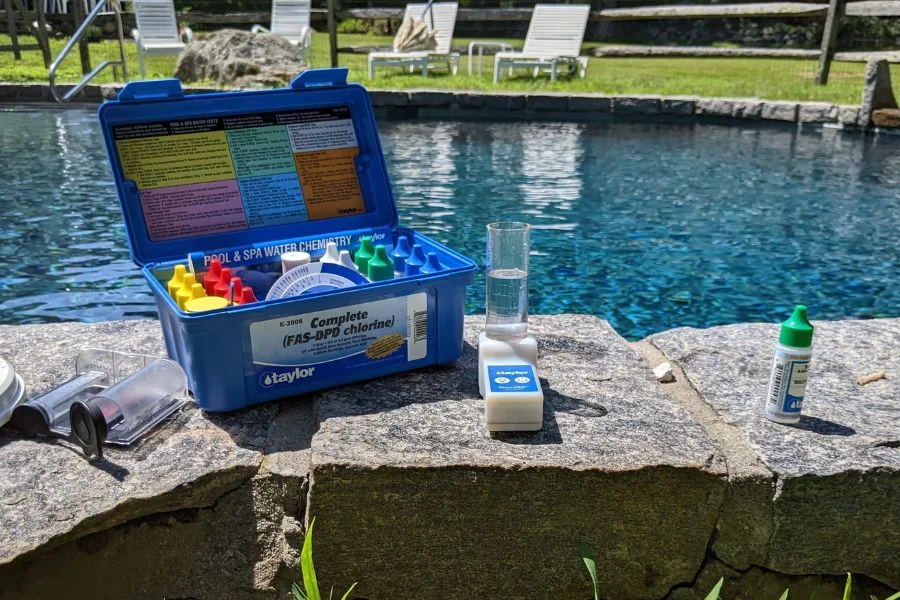
- Testing Pool Water: Every homeowner should have an accurate and reliable pool testing kit. Water with algae or organic contaminants is a health hazard and can obscure the bottom of the pool.
- The Visibility Test: If the water is cloudy, it is a safety risk. You must be able to see a swimmer at the bottom of the deep end at all times.
- Suction Safety: Regularly inspect drain covers to ensure they are VGB-compliant and securely attached. Teach children never to play near or sit on pool drains or suction outlets.
- Lighting: Adequate lighting is crucial for nighttime swims to improve visibility both in and around the water.
Safely Handling and Storing Pool Chemicals
Pool chemicals are powerful substances designed to keep your water clean, but they can be hazardous. Proper chemical storage and use will help you and your pool stay safe.
- Keep Out of Reach: Always store chemicals in a dedicated area that is inaccessible to children and pets. Ideally, this should be a locked storage box or shed.
- Wait 20 minutes before chemical additions: Waiting between chemical additions gives the pool and filters enough time to circulate the chemicals.
- Cool, Dry, and Ventilated: Chemicals like chlorine and muriatic acid react poorly to heat and moisture. Store them in a well-ventilated area to prevent the buildup of toxic fumes and keep them away from direct sunlight to maintain their potency.
- Never Mix or Stack: Store different types of chemicals (like liquids and granules) separately. Never stack containers on top of each other, as a leak from an upper bucket into a lower one can cause a dangerous chemical reaction or even a fire.
Organizing Pool Toys
Leaving toys in the water after the fun is over is one of the most common safety oversights for pool owners.
- Avoid the “Attractive Nuisance”: A bright, floating toy or a colorful pool noodle can be a magnet for a curious toddler. If they see a toy in the middle of the pool, they may try to reach for it or jump in to grab it while no one is watching.
- The “Clear the Water” Rule: Make it a standard rule that the last person out of the pool must clear all floats, balls, and toys from the water.
- Use a Dedicated Storage Bin: Invest in a sturdy, ventilated deck box or storage bin located well away from the pool’s edge. This keeps the deck clear of tripping hazards and ensures that the pool looks “closed” to kids when playtime is officially over.
Having Fun and Being Safe Go Hand-in-Hand
Maintaining pool safety is just as the pool maintenance itself.
By following some simple rules and guidelines, you can ensure your pool remains a place of joy rather than a place of worry.