
Your pool liner is more than just a fancy wrapper that holds water. It’s the backbone of your above-ground pool.
It protects the structure, keeps the water in place, and gives your pool its fancy look! When it starts to wear out, fade, wrinkle, or tear, the whole swimming season can get thrown off pretty quick.
A lot of above-ground pool owners don’t know what kind of liner they have, how long it should last, or what to do when problems show up.
Let’s try and change that!
Not All Liners Are the Same
Above ground pool liners come in different styles, each with their own quirks. Some are draped over the pool wall and clipped in place. Others snap into a track for a cleaner, more finished look.
In the case of soft-sided pools like Intex and Bestway inflatables, the liner is the pool itself. For the most part, we will be talking about hard-sided pools and the different types of liners available.
Overlap Liners
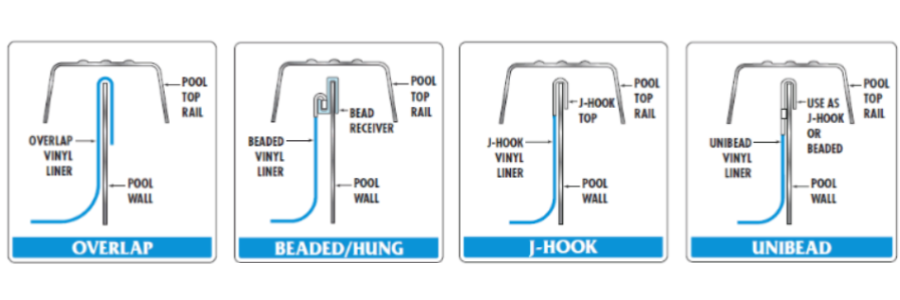
Overlap liners are one of the most common styles to use. These are installed by pulling the liner over the pool wall and securing it with plastic coping strips.
They’re fairly easy to install and offer some wiggle room if your pool isn’t perfectly level.
The easiest way to tell if you have an overlap liner is if you can see the liner hanging over the pool wall (overlapping!).
Beaded Liners
Beaded liners are a step up from overlap. They feature a built-in bead that snaps into a track and runs around the inside top of the pool wall.
This creates a bit of a cleaner, more professional finish and allows for easier replacement down the line. They do require a compatible track system, however, and everything has to line up just right.
J-Hook Liners
J-hook liners have a built-in “J” shaped lip that hooks right over the top of the pool wall without any separate track or coping strips.
They rest on the edge, making installation relatively simple while still giving that tight, clean finish.
J-hook liners are a great middle-ground between overlap and beaded styles. They are simple to set up and still removable for replacement without fussing with tracks.
Unibead Liners
Universal bead liners, or unibead, can be used both as a beaded and J-hook liner.
They come with a universal top edge that can be installed either way: snap it into a bead receiver if your pool has one, or hook it over the wall like a J-hook liner.
This flexibility makes them popular as aftermarket replacements, especially for people upgrading from overlap liners or changing hardware setups.
Understanding Liner Thickness
While there are different liner types, there are also different thicknesses. It might seem straightforward, but not all liner ratings are created equal for your pool.
Thickness measurements for vinyl pools are by mil and gauge
Mil is short for “thousandths of an inch.” So a 20 mil liner is 0.020 inches thick, while a 25 mil liner is 0.025 inches. It doesn’t seem like it, but those are pretty different thickness levels.
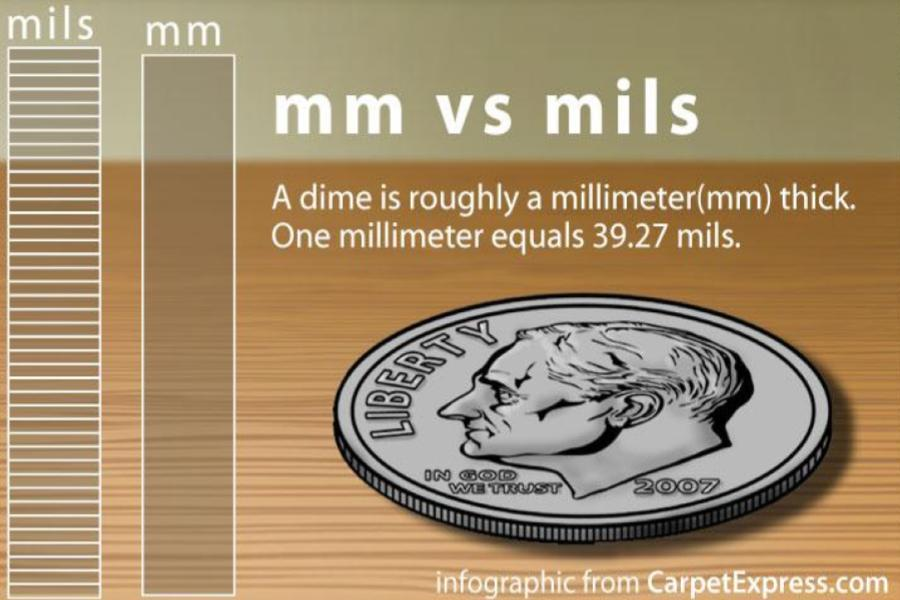
Mil is a more precise measurement and usually more trustworthy when comparing liner quality.
For most above-ground pools, a 20 or 25 mil liner from a reputable company strikes the right balance between price and durability.
Gauge, on the other hand, is less standardized. Some manufacturers label their liners as 20 gauge or 25 gauge, but these numbers don’t always match mil measurements and may vary from brand to brand.
For example, a 20-gauge liner might only measure 16 or 18 mil. In general, you should always check if the liner packaging or listing provides the actual mil thickness.
For reputable brands, this typically is not an issue.
Thicker liners generally offer more durability, puncture resistance, and longer lifespan. However, they’re not immune to wrinkles, fading, or UV damage. They are also less stretchy, so it’s a little tougher to install than thinner liners
How Long Should a Liner Last?
The lifespan of the liner depends on the type of pool, the quality of the liner itself, climate, and the care you put into it.
Inflatable kiddie pools or other soft-sided pools usually only last one to three seasons, especially if they’re left out in the sun or not properly folded and stored. With proper care and seasonal storage, you might stretch that longer.
For hard-sided pools, liners often last eight to twelve years. If they are well-maintained, however, some liners can last a couple decades and more!
The key to making a liner last is keeping the water chemistry balanced and covering the pool when not in use. UV light and harsh chlorine are what break down vinyl the fastest.
Maintaining Your Pool Liner to Last Longer
Regular maintenance is the key to keeping your liner looking good and prolonging is life for as many seasons as possible.
Start with water chemistry. A balanced pool isn’t just easier to swim in. It protects your liner.
Testing your water regularly and making small adjustments when needed is one of the most important things you can do to prevent fading and wear.
Sunlight is another liner killer. UV rays slowly break down vinyl, even when the water is perfectly clean.

Using a solar cover when the pool isn’t in use, especially during the hottest parts of the day, can shield the liner from direct sun exposure. It also helps retain heat and reduce chlorine loss, so it’s a win-win.
Physical wear and tear is also a big factor. Most of the time it’s unavoidable because you want to have fun!
However, dragging vacuums or pool toys across the floor can scuff the liner or cause micro-tears that grow over time. Encourage swimmers to avoid sharp toys, and don’t allow dogs with claws into the pool if you can help it.
Clean and brush your liner with soft tools only. Don’t use stiff brushes, abrasive pads, or metal poles that could scrape the surface.
Make a habit of inspecting your liner regularly. Look along the seams and corners for any signs of lifting, stretching, or tiny leaks. Catching a problem early can save you from having to do a full replacement later.
Can You Patch a Liner?
Depending on the severity of the hole or tear, liners can be patched fairly easy with a kit. Some are even designed to be used underwater.

The key is cleaning the area thoroughly, cutting a patch with rounded corners to avoid peeling, and pressing it flat with the right adhesive.
If you’re dealing with a seam tear or a worn-out liner that has multiple weak spots, it’s time to start fresh with a replacement.
How to Pick the Right Replacement Liner
When it’s time to replace your liner, first make sure you know which style you currently have. Replacing an overlap liner with a beaded one will require a new track system, so it’s usually easiest to stick with the same format.
You’ll also need exact measurements of the pool. You should know its diameter or length and width, wall height, and in some cases, the depth of the pool center. Don’t just go by what you think. Measure to be sure!
Pattern can also make a difference in terms of look and feel. Lighter blue liners show stains and fading more easily, while darker patterns tend to hide wear better and keep the pool looking newer longer.
Can You Replace a Liner Yourself?
For smaller pools or soft-sided setups, it’s often easier to replace the entire thing rather than try to re-line it.
But for hard-walled framed pools, you can absolutely replace the liner yourself with the right tools, prep, and help.
Many pool owners take this opportunity to add a liner pad, foam cove, or even a gorilla pad to protect the new liner from future damage.
Remember, you don’t want your pool to be empty for long, so make sure you get to work right after you drain it!
What About Liner Pads and Foam Coves?
Liner pads are thin layers of fabric or foam that sit underneath the liner to help protect against sharp stones, weeds, or uneven ground. It helps prevent punctures and extend its life.
They also feel more comfortable underneath your feet!
Foam coves, or pool coves, are pre-shaped wedges that line the base of an above-ground pool’s wall before the liner goes in.
They form a smooth, angled curve where the wall meets the floor, helping protect the liner from stretching or bulging once the pool is filled with water.
The Bottom Line(r)
Knowing how liners work, what can go wrong, and how to replace or maintain them gives you a big advantage when it comes to above-ground pool care.
Protect it as much as you can, and you’ll be enjoying the pool more than worrying!